Choosing a family dentist means looking beyond location or whether an office has an open appointment next week. A strong family dentist checklist should consider preventive care, services for children and adults, communication style, dental technology, appointment availability, emergency care, insurance and financial transparency, and whether the practice can support your family’s changing dental needs over time. The best choice is usually a dental office that makes routine care convenient while also building trust with every member of the household. Parents should feel comfortable asking questions. Children should receive patient, age-appropriate care. Adults should have access to preventive and restorative options as their needs change. Most importantly, the dentist should focus on identifying problems early, explaining findings clearly, and helping patients make informed treatment decisions instead of treating every visit as an isolated appointment.
For families in Westlake, OH, convenience matters, but consistency matters just as much. Moving every family member between different dental offices can make scheduling, records, treatment planning, and preventive care more complicated. Bennett Family Dental provides family dentistry for patients at different stages of life, including preventive examinations, professional cleanings, digital X-rays, fluoride treatments, sealants, gum disease evaluations, oral health education, children’s dental care, and adult dentistry. The practice also emphasizes personalized attention and communication so patients understand their oral health and available treatment options. These qualities offer a useful example of what families can look for when comparing dental offices in Westlake and surrounding communities.
Start With a Family Dentist Checklist That Covers the Essentials
A family dental practice should make oral healthcare easier to manage across different ages and stages of life. However, the term “family dentist” alone does not tell you everything about how an office operates. Two practices may both provide family dentistry while differing significantly in their preventive philosophy, approach to children, scheduling policies, technology, communication, and range of services. Therefore, families should compare practical and clinical factors rather than choosing solely because an office is nearby. Think about what will matter not only during the first cleaning but also several years from now. A young child may initially need preventive visits and help becoming comfortable in the dental chair. Parents may need fillings, periodontal evaluations, cosmetic treatment, or restorative care later. Older family members may eventually have different restorative or tooth-replacement needs. A practice capable of adapting to these changes can provide greater continuity and reduce the need to repeatedly establish care elsewhere.
What to Check | Why It Matters for Families | What to Ask |
Preventive philosophy | Early detection can help address dental problems before they become more complex | How does the practice approach exams, cleanings, gum health, and cavity prevention? |
Children’s care | Positive early experiences can influence long-term comfort with dentistry | How does the team help children feel comfortable? |
Adult services | Dental needs change over time | What preventive, restorative, periodontal, and cosmetic services are available? |
Communication | Families need to understand findings and treatment choices | Will the dentist explain options and answer questions clearly? |
Technology | Modern tools may improve diagnosis and treatment planning | What diagnostic technology does the office use? |
Scheduling | Multiple family appointments can become difficult to coordinate | Are family-friendly scheduling options available? |
Emergency care | Dental problems do not always occur during routine visits | How does the office handle urgent dental concerns? |
Insurance and finances | Coverage and out-of-pocket costs affect treatment decisions | Can the office explain benefits, estimates, and payment expectations? |
Location | Routine care becomes easier when the office is accessible | Is the practice convenient from home, work, or school? |
Long-term fit | Families benefit from continuity and established relationships | Can the practice support changing dental needs over time? |
Use this table as a starting point rather than a scoring system where the practice with the most checkmarks automatically wins. Some factors will matter more to your household than others. A family with several young children may place more weight on children’s care and convenient scheduling. Someone with a history of gum disease may prioritize preventive monitoring and periodontal services. Another household may need a dentist who can coordinate routine care with restorative or cosmetic treatment. Your final decision should reflect how well the practice aligns with the actual needs of your family.
Make Sure the Practice Is Comfortable Treating Children and Adults
Family dentistry works best when the office understands that a five-year-old, a teenager, a parent, and an older adult do not have identical dental needs. Children may need extra time to become comfortable with an unfamiliar environment. Teenagers may require guidance related to changing oral hygiene habits, sports, orthodontic care, or wisdom tooth development. Adults may need preventive care, fillings, periodontal treatment, crowns, cosmetic dentistry, or replacement options for missing teeth. Older patients can experience further changes involving gum health, tooth wear, restorations, dry mouth, medications, or tooth replacement. A true family-focused approach recognizes these differences while giving every patient individualized attention.
For younger patients, look for signs that the office understands how to create a positive experience:
- The team communicates in simple, age-appropriate language.
- Children are given time to become familiar with the dental environment.
- Parents can ask questions about home care and cavity prevention.
- Staff members respond patiently when a child feels nervous.
- Preventive services are adapted to the child’s individual needs.
- The practice encourages healthy habits rather than using fear about cavities or treatment.
- Parents receive clear explanations about findings and recommended next steps.
Bennett Family Dental describes its children’s approach as gentle and age appropriate. The practice states that its team explains procedures in a friendly way and works to create an encouraging environment that can reduce anxiety. At the same time, its family dentistry offering extends into adult preventive, restorative, and cosmetic care, allowing oral healthcare to evolve as patients’ needs change.
Parents should also consider their own comfort with the office. Choosing a dentist only because children seem comfortable may create problems if parents need treatment that the practice cannot reasonably provide. Likewise, an office focused almost entirely on adult restorative dentistry may not feel like the right long-term environment for young children. The goal is balance. A family practice should be able to explain how it manages preventive care at different ages and when a referral to another dental specialist would be appropriate.
Evaluate Communication, Trust, and the Patient Experience
Communication may be harder to measure than office location or appointment hours, yet it often determines whether patients remain comfortable with a dental practice long term. A dentist may have advanced technology and an impressive office, but those advantages mean less when patients leave appointments confused about what was found or why treatment was recommended. Good dental communication should make complex information understandable without talking down to the patient. The dentist should listen before recommending treatment, answer reasonable questions, explain alternatives, and allow patients to participate in decisions about their health. The American Dental Association identifies open and clear communication as an important part of a positive dentist-patient relationship and emphasizes the role of mutual trust.
A useful family dentist checklist should therefore include the experience before, during, and after the clinical portion of the visit. Notice how the office handles your initial inquiry. Is scheduling information clear? Are questions answered respectfully? During the appointment, does the dental team ask about your concerns before beginning the examination? Does the dentist explain findings in understandable terms? If treatment is needed, do you understand why, what options are available, and which concerns should receive priority? These details can become especially important when a child feels anxious, an adult has had a negative dental experience, or a family needs to make decisions about more extensive treatment.
Communication Quality | Positive Sign | Potential Concern |
Listening | Dentist asks about your priorities and symptoms | Concerns are dismissed or rushed |
Explanations | Findings are explained in understandable language | Heavy technical language is used without clarification |
Treatment options | Reasonable alternatives are discussed | Only one option is presented without explanation |
Questions | Patients are encouraged to ask questions | Questions seem unwelcome |
Financial communication | Expected costs and coverage questions are discussed before treatment when possible | Costs remain unclear until after care |
Follow-up | Next steps are clearly explained | Patient leaves unsure what happens next |
Anxiety support | Concerns about treatment are acknowledged | Patient fears are minimized or ignored |
Bennett Family Dental’s new-patient information states that the initial appointment includes a comprehensive evaluation and personalized treatment discussion. The practice also says its team takes time to answer questions, explain findings, and review available treatment options. Those are useful qualities for families to seek because long-term dental care involves many decisions over time, not simply twice-yearly appointments.
Check Appointment Availability, Convenience, and Emergency Access
Practical convenience has a direct effect on whether families can maintain consistent dental care. An office may provide excellent dentistry, but a difficult location, limited appointment availability, or scheduling system that does not work with school and work routines can make regular attendance challenging. Parents who coordinate several appointments may especially value a dental team that understands the realities of managing multiple schedules. Convenience does not necessarily mean that every requested appointment time will always be available. Instead, families should look for clear scheduling policies, reasonable access to appointments, and a practice that communicates effectively when schedules change.
Timing and Availability Factors to Compare
Scheduling Factor | Why It Matters |
New-patient availability | Long delays can make establishing care difficult |
Routine appointment scheduling | Regular examinations are easier when appointments fit family routines |
Family scheduling options | Coordinating several household members can reduce repeated trips |
Appointment length | Adequate time supports thorough care without unnecessary rushing |
Emergency availability | Urgent tooth pain or injury may require faster attention |
Rescheduling policies | Families need to understand what happens when plans change |
Location | A convenient Westlake office can reduce travel time from home, work, or school |
Communication | Clear reminders and scheduling instructions help reduce missed visits |
Bennett Family Dental describes flexible scheduling and efficient visits as part of its family dentistry approach. Its current website also advertises same-day emergency care and new-patient availability, although patients should always contact the office directly to confirm availability for a particular day or dental concern.
Emergency access deserves particular attention because dental problems do not always appear during a planned examination. A fractured tooth, sudden swelling, severe toothache, or dental injury may require prompt assessment. Ask how the practice handles urgent concerns during office hours and what patients should do when an issue occurs outside normal scheduling. You do not need a guarantee that every problem will receive immediate treatment. You do need to understand how the office helps established patients determine the appropriate next step.

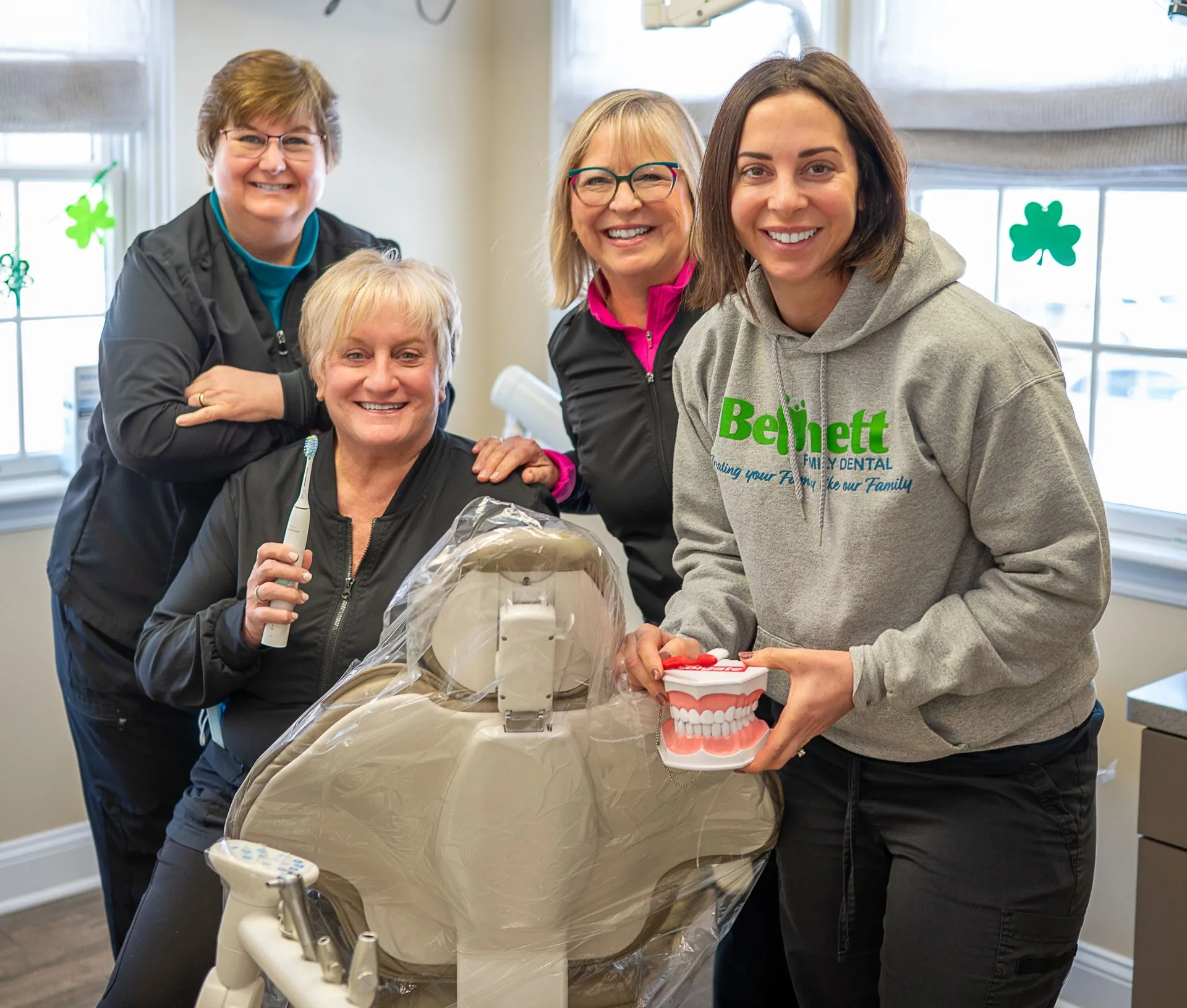
Treating Your Family Like Our Family
Bay Village & Westlake's Most Trusted Dental Team
At Bennett Family Dental, proactive care is the foundation for lifelong oral health. From your child's first visit to complete family dentistry — we treat every patient like one of our own.
Review Insurance, Fees, and Financial Communication Before Treatment
Insurance can influence which practice a family chooses, but “we take insurance” is not enough information on its own. Dental plans differ in networks, deductibles, annual maximums, waiting periods, limitations, frequencies, and covered procedures. A practice may be able to submit claims for one plan while being considered out of network for another. Therefore, families should verify their specific coverage directly with the dental office and insurance carrier before assuming a service will be covered. Bennett Family Dental’s new-patient information asks patients to bring their dental insurance card when applicable, but patients should contact the office for details about their individual plan rather than relying on general website information.
Financial transparency is equally important for care that insurance does not fully cover. Before significant treatment begins, patients should understand the estimated fee, expected insurance contribution when available, likely patient responsibility, and whether the plan involves several stages. Estimates are not always guarantees because insurers make final benefit determinations, but the practice should still be able to explain what it knows and identify areas of uncertainty.
Financial Question | Why You Should Ask |
Is the practice in network with my specific plan? | Network status can affect out-of-pocket expenses |
Will the office submit insurance claims? | Claim procedures vary among practices |
Can benefits be estimated before treatment? | An estimate helps families plan expenses |
What is my expected portion? | Insurance may not pay the entire treatment cost |
Are some services considered elective or excluded? | Plans frequently have coverage limitations |
When is payment expected? | Policies may vary by procedure |
Are treatment options explained before scheduling? | Families should understand both clinical and financial considerations |
Price should not become the only factor in your decision. The cheapest treatment may not necessarily address your long-term needs, while the most expensive option may not automatically be the right choice either. What matters is informed decision-making. You should understand what treatment is recommended, why it is being suggested, what reasonable alternatives exist, and how financial considerations fit into the plan.
How to Compare Family Dentists Before Making Your Final Choice
Online searches can produce dozens of dental practices within driving distance, which can make the final choice feel more complicated than expected. Instead of trying to compare every detail at once, narrow your options using a structured process. Start with the factors that are essential for your household. Then use each practice’s website, phone conversation, and first appointment to evaluate the qualities that cannot be confirmed online. Reviews can provide useful context about patient experiences, but they should complement rather than replace your own assessment. Every family’s expectations are different, and a practice that fits one household perfectly may not be the best match for another.
A practical step-by-step process includes:
- Define your family’s needs. Consider the ages of household members, current dental conditions, previous treatment, dental anxiety, and services you are likely to need.
- Check the practice’s service range. Confirm that the office provides routine preventive care and can address common dental concerns for your household.
- Evaluate children’s care when relevant. Look for a patient, age-appropriate approach rather than assuming every general dental office treats children in the same way.
- Review location and scheduling. Consider realistic travel time from home, school, and work rather than distance alone.
- Verify insurance directly. Ask about your specific plan and confirm network information with the insurer when necessary.
- Look at communication. Pay attention to whether questions receive clear, respectful answers before you become a patient.
- Ask about emergencies. Find out how urgent dental problems are handled.
- Evaluate the first appointment. Notice whether the dentist listens, explains findings, and makes you feel included in decisions.
- Think beyond today’s needs. Consider whether the practice appears capable of supporting your family as dental needs change.
This process turns the family dentist checklist into a decision framework rather than a collection of generic features. One of the strongest signs of a good fit is whether you can imagine comfortably contacting the office when you have a question or dental concern several years from now. Long-term care depends on trust and consistency. A convenient office is valuable, but an office where patients understand their care and feel comfortable returning is even more important.
Questions to Ask at Your First Appointment
A first visit is not only an opportunity for the dentist to evaluate you. It also gives you a chance to decide whether the practice feels right for your family. Ask how preventive recommendations are personalized, what services children receive, how the office handles dental anxiety, and how treatment options are presented. You can also ask whether the practice can obtain previous records before repeating diagnostic procedures and how urgent concerns are managed. The ADA notes that an initial positive experience can help establish the foundation for a productive long-term dentist-patient relationship.
Where Can Families Find Comprehensive Dental Care in Westlake, OH?
Local accessibility becomes especially valuable when one dental practice cares for several people in the same household. Bennett Family Dental provides General Dentistry in Westlake, OH for patients looking for preventive and ongoing oral healthcare. Its broader family dentistry services cover children and adults and include examinations, professional cleanings, digital X-rays, fluoride, sealants, gum disease evaluations, oral health education, and other care based on individual needs. The practice also emphasizes flexible scheduling and long-term relationships, which can help families centralize routine dental care instead of coordinating separate offices for every household member.
For a family searching online for a Dentist near me, proximity should still be evaluated alongside quality of care, communication, services, appointment access, and long-term fit. Bennett Family Dental is located at 27748 Center Ridge Road in Westlake and provides care for families in Westlake and the surrounding area. Its new-patient process includes a comprehensive examination, digital X-rays when needed, gum health evaluation, professional cleaning in most routine cases, and an individualized treatment discussion. Previous dental records and recent X-rays can also be sent before the appointment, which can help the team understand a new patient’s history.
The right family dentist should feel useful during ordinary preventive visits as well as moments when a family member develops a problem. As children grow, parents age, restorations need monitoring, and oral-health priorities change, having an established relationship can make those transitions easier. That continuity is one reason the long-term fit of the dental practice deserves as much attention as its location.
Final Family Dentist Checklist: Choose a Practice That Can Grow With Your Family
Choosing a family dentist is ultimately about finding a practice where clinical care, convenience, communication, and trust work together. Start by evaluating preventive services and whether the practice comfortably treats different age groups. Then look at how the team communicates, what technology supports diagnosis, whether scheduling works for your household, how urgent concerns are handled, and how clearly insurance and financial questions are addressed. Finally, consider how you felt during your interaction with the dental team. A strong family dentist checklist should help you identify a practice you can rely on for routine cleanings today, changing dental needs in the future, and clear professional guidance when unexpected problems appear.
Avoid making the decision based on one feature alone. A nearby office may be inconvenient if appointments are difficult to obtain. Advanced technology offers limited value when treatment is poorly explained. Low advertised fees may not tell you whether a particular service meets your needs or what insurance will actually cover. Likewise, positive reviews can be reassuring, but your own comfort and communication with the dentist remain important. The strongest long-term choice is a practice that combines appropriate clinical care with a patient experience your family can realistically maintain.
Bennett Family Dental provides family-focused dental care in Westlake, OH, with preventive services, children’s care, adult dentistry, digital imaging, gum evaluations, and personalized treatment discussions designed to support patients through different stages of life. Families comparing local dental providers can use this family dentist checklist to decide which qualities matter most and then discuss those priorities directly with the dental team. Contact Bennett Family Dental today to schedule your family’s visit and take the next step toward convenient, personalized dental care in Westlake.

Dr. James Bennett, DDS, is a second-generation dentist and owner with over 20 years of experience in family, cosmetic, and restorative dentistry. A U.S. Army veteran and current leader in the Ohio Army National Guard, he combines clinical expertise with a patient-first approach focused on delivering immediate, high-quality results.